

Elements of Art: Texture

Using Your Eyes Like a Magnifying Glass
Texture is one of those art words that can sound a little mysterious at first… until kids realize they already understand it. Texture is basically the surface quality of something—whether it looks smooth, bumpy, fuzzy, rough, shiny, scratchy, soft, or sticky. And just like color, texture is part of storytelling in art: it helps us understand what something is made of, what kind of world it belongs in, and the mood the artist is creating.
In art, texture helps us answer a simple question:
What would this surface be like in real life?
And as soon as students start noticing texture, their artwork often becomes richer and more detailed—because they’re paying attention to what things are made of and how to show that with art materials.
Two kinds of texture: “real” and “looks-like”
At Art Studio 760, we talk about texture in two main ways:

1) Actual texture (you can feel it)
This is when the artwork has real, physical texture built into it—like:
thick paint (impasto)
clay, papier-mâché, cardboard
collage materials (fabric, tissue paper, corrugated paper)
modeling paste or mixed media
2) Visual texture (it looks textured)
This is when an artwork looks rough, smooth, furry, or shiny—but the surface is still flat. Artists create visual texture with:
lines and patterns
shading and highlights
repeated marks
careful observation (like drawing the tiny bumps on an orange peel)
This is a fun moment for kids: they realize texture can be “real” or “imagined.”
Texture is a clue: what is it made of?
One of the easiest ways to teach texture is to connect it to materials kids already know:
A sweater vs. a raincoat
Tree bark vs. a leaf
A rock vs. a sponge
A kitten vs. a turtle shell
Artists make choices about texture to help the viewer understand a surface quickly—sometimes without even drawing every detail. A few marks in the right place can say, “This is fluffy,” or “This is shiny,” or “This is rough.”

And texture trains the eye. When students start looking for tiny surface patterns and small changes in light and dark, their drawing becomes instantly more believable—because they’re truly observing.
Texture words we love using at the studio (and why observation matters)
Sometimes kids just need a bigger vocabulary bank. Here are some favorites:
Smooth
Rough
Bumpy
Ribbed
Fuzzy
Scratchy
Pebbly
Wrinkled
Glossy
Matte
Grainy
Velvety
But the real key with texture is observation. Texture is one of the best reasons to slow down and really look—because you can’t make something look glossy, fuzzy, or bumpy unless you notice what makes it that way.
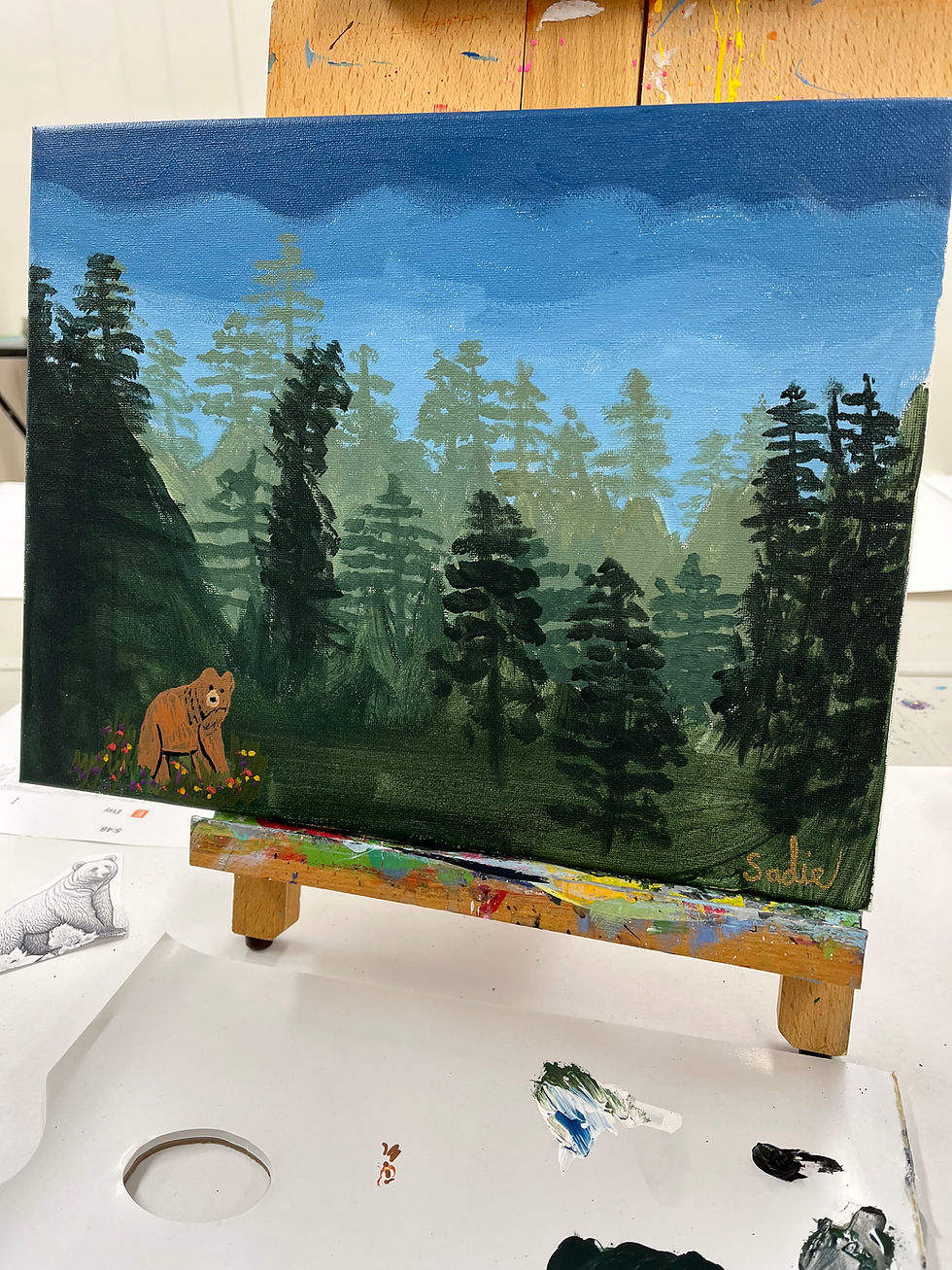
At the studio, we talk about using our eyes like a detective’s magnifying glass. When you “zoom in” and look closely, you start noticing the tiny surface clues—little bumps, speckles, scratches, stripes, shine, or fuzz. That close-up noticing is where texture lives. And once students start seeing those details, they can translate them into marks, patterns, and shading that make their artwork feel more believable.
We also ask questions like:
What tiny marks do you actually see on the surface?
Where are the light spots and the darker spots?
Does the surface repeat in a pattern, or is it random?
What’s different about this area compared to that area?
A fun challenge is to pick one texture word and build an artwork around it:
“Today’s goal: make this look glossy.” Or “Let’s make it look fuzzy.”
And then we ask: What do you notice that helps you show it?
Sometimes texture is the whole personality of the artwork
Texture can totally change the mood:
Smooth, soft textures can feel calm and gentle
Sharp, scratchy textures can feel energetic and dramatic
Thick, layered textures can feel bold and expressive
Texture is part of the story—just like color.
The “Texture Detective” Challenge
1. Choose one everyday object (an orange, a sneaker, a pinecone, a stuffed animal, a crumpled paper bag).
2. Create a drawing of it using only lines and patterns—no color needed.
3. Add 3 “texture clues” in the best spots: tiny marks that help the surface read correctly (like the shine on a sneaker, or the bumps on the orange peel).
Kids love this because it feels like solving a mystery with marks.
Try it at home: Texture Collage Scavenger Hunt

If you have old magazines, junk mail, tissue paper, or packaging at home, try this:
Pick one theme: smooth, rough, fuzzy, or shiny
Find as many examples as you can and glue them onto a page
Bonus: label each piece with a texture word
It’s simple, it’s creative, and it builds art vocabulary fast.
Want to explore Texture at Art Studio 760?
Texture is one of the quickest ways to make artwork feel more detailed and more “real.” Once kids learn what to look for, they start spotting texture everywhere—and they bring that awareness right back into their projects.
Ready to keep building those “texture detective” skills in the studio? In our Art Studio 760 kids’ classes, we help students learn how to spot texture in real life and recreate it with line, shading, mixed media, and hands-on materials. Book a class today and let’s turn close observation into confident, detailed artwork.


Comments